
Recovery
6 min read
Myofascial Release for Lasting Muscle Relief
Discover how myofascial release in Laguna Hills may ease chronic muscle tightness, support mobility, and complement personalized recovery care at our clinic.
Read the article
If you’ve been told you have a herniated disc, bulging disc, or sciatica, you’ve probably heard about three paths: manage it, inject it, or operate. There’s a fourth, and it’s the one we start most of these cases with, non-surgical spinal decompression. Here’s exactly what it is, how it works, and when it’s worth trying before you commit to anything more invasive.
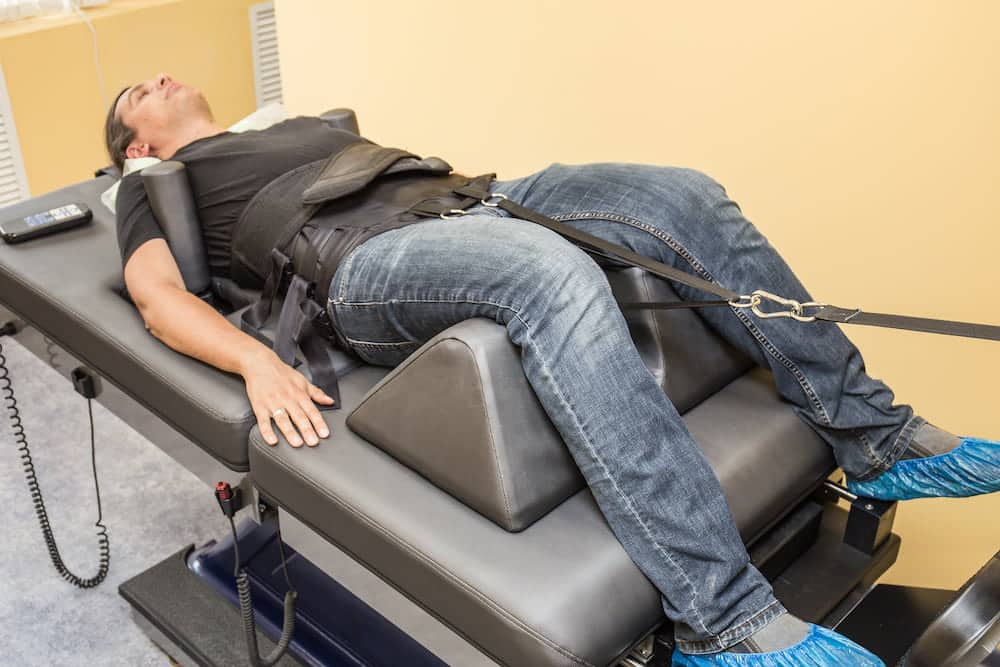
Spinal decompression is a form of motorized traction, you lie comfortably on a computer-controlled table that applies a gentle, cyclical pulling force to a specific segment of your spine. The pull isn’t constant; it eases on and off in a programmed rhythm designed to coax fluid, oxygen, and nutrients back into the disc while relieving pressure on nearby nerves.
In plain terms: it creates space where your spine has lost it. And space is exactly what an inflamed disc or an irritated nerve root needs to calm down.
You’re fully clothed, lying face-up or face-down depending on what we’re treating. A padded harness cradles your hips (or head, for cervical work) and the table applies the traction in gentle pulses. Sessions last 20–40 minutes. Most patients describe it as one of the most relaxing parts of their treatment, several fall asleep on the table.
There’s no honest one-size-fits-all answer, but a realistic frame: most patients feel a shift in the first 3–5 sessions and complete a full protocol in 12–24 visits over 6–12 weeks. We reassess constantly, if it’s not working after the first few sessions, we don’t just keep going. We change the plan.
“The goal isn’t to get you on the table forever. It’s to get you moving well enough that you don’t need it.”
Decompression on its own works. Decompression paired with targeted adjustments, PEMF or red light for the inflamed segment, and a set of specific rehab drills works better. The best outcomes we see combine passive care (decompression + modalities) with active care (movement + strength) in the same plan.
Assuming your case is appropriate, and we’ll tell you honestly if it’s not, yes, we think it’s worth trying a real, well-structured decompression protocol first. It’s non-surgical, non-injected, and if it works, you avoid a much bigger intervention. If it doesn’t, you haven’t burned any bridges, you’ve just added information for the next step.
The first visit is a full workup, history, exam, movement screen, and a specific recommendation. If decompression is a fit, we’ll build a realistic plan. If it isn’t, we’ll tell you what we’d do instead, and you can always contact us about your case first. We serve patients across South OC, Laguna Hills, Laguna Niguel, Mission Viejo, Aliso Viejo, Irvine, and Newport Beach, and we can usually get you in within a day or two.
Written by
Dr. Dustin Hack, D.C.
Chiropractor · Aligned Health
Related services
Ready when you are
Schedule now. Most PPO plans accepted.
Keep reading
Discover how myofascial release in Laguna Hills may ease chronic muscle tightness, support mobility, and complement personalized recovery care at our clinic.

Move Beyond Morning Stiffness with the Right Care