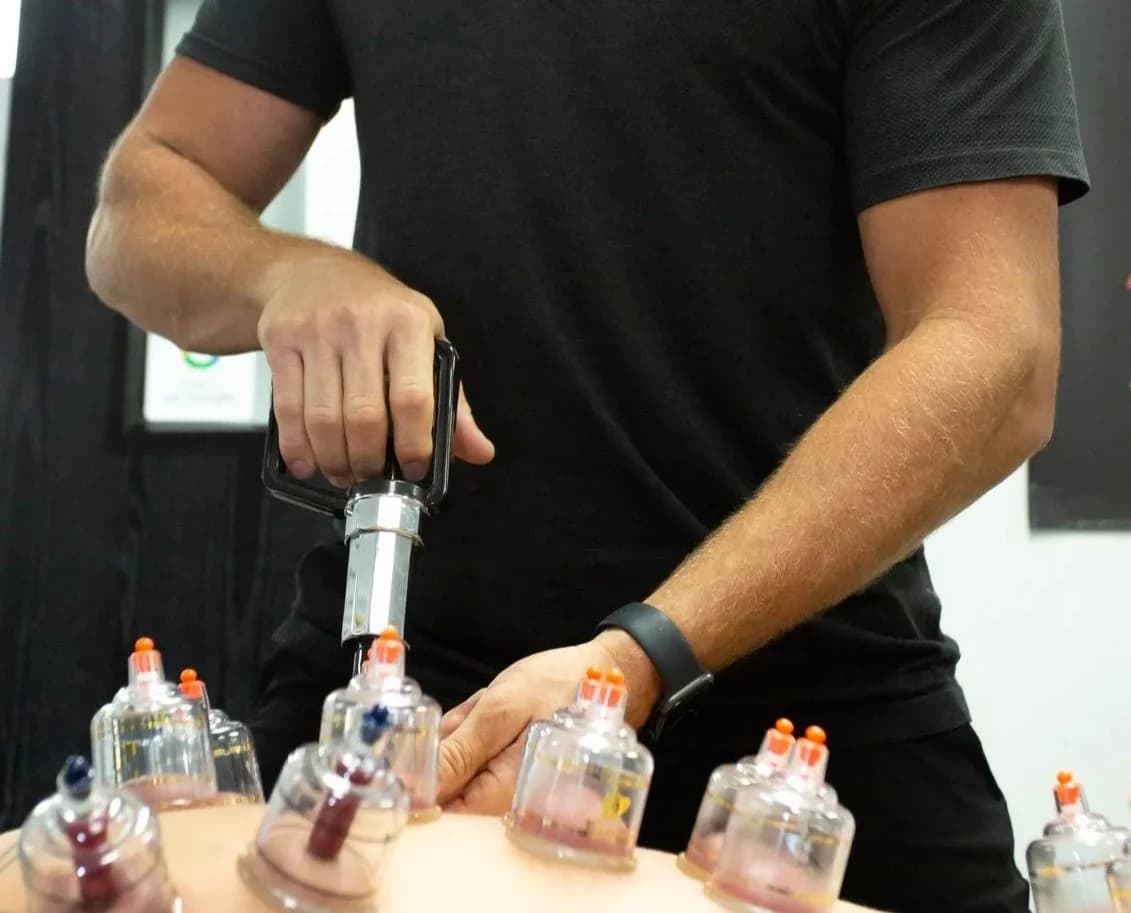
Cupping
Fascial suction therapy
Learn more
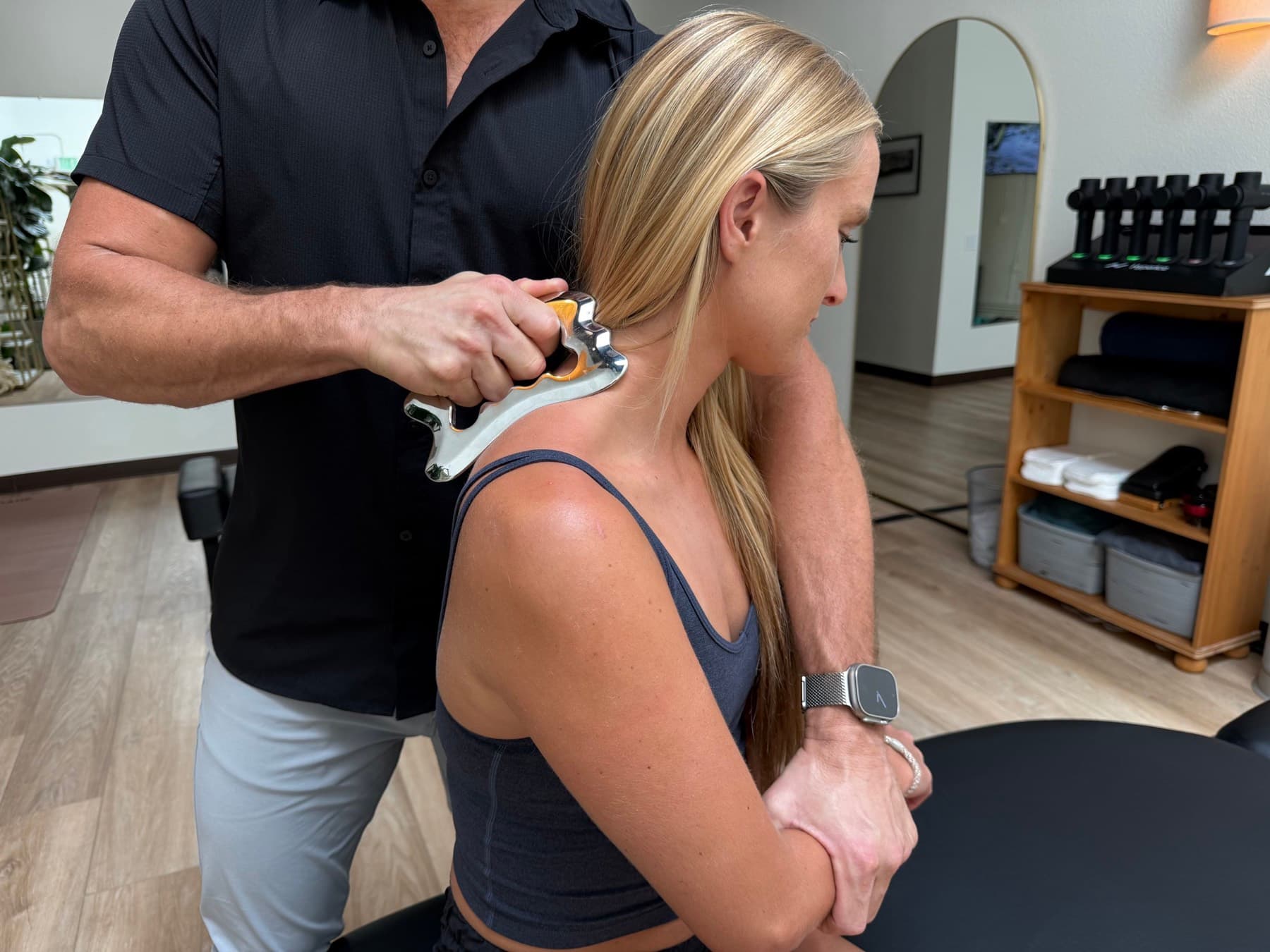
Instrument-assisted release for stubborn fascial restrictions the fingers can’t quite reach.
Myofascial scraping, sometimes called IASTM, uses smooth stainless-steel tools to release fascial adhesions and improve tissue glide.
It’s our go-to for restrictions that feel ‘stuck’ despite manual work: chronic IT-band tightness, plantar fascia complaints, post-injury scar tissue, and lingering forearm or calf issues in overuse cases.
How it works
A brief warm-up with heat or light manual work primes the fascia for treatment.
A small amount of skin-safe emollient lets the tool glide smoothly across the area.
We use the tool to scan for ‘gritty’ restrictions and then treat them with controlled strokes.
You move the joint through range while we treat, and we finish with mobility drills to lock in change.
Why patients ask for it
Is it right for you?
Great for
Not right when
If any of these apply we’ll build a plan around a different modality, and we’ll tell you why.
What to expect
Duration
8-12 min per treated area
Frequency
1-2 times per week during active treatment
Prep
Wear clothing that lets us access the area.
You’ll feel firm pressure and sometimes a ‘gritty’ sensation as the tool crosses adhesions. Mild pink flushing (petechiae) can appear briefly, that’s normal and expected. Some soreness the next day is common and short-lived.
FAQ
Firm but tolerable. You control the pressure with our guidance. If it’s sharp, we back off, that’s not the goal.
The strokes bring blood to the surface (petechiae). It’s not bruising in the traditional sense and typically fades within a day or two.
Both work on fascia. Cupping uses suction to lift tissue; scraping uses instruments to shear across it. We often combine them in the same visit.
Ready when you are
Schedule now. Most PPO plans accepted.