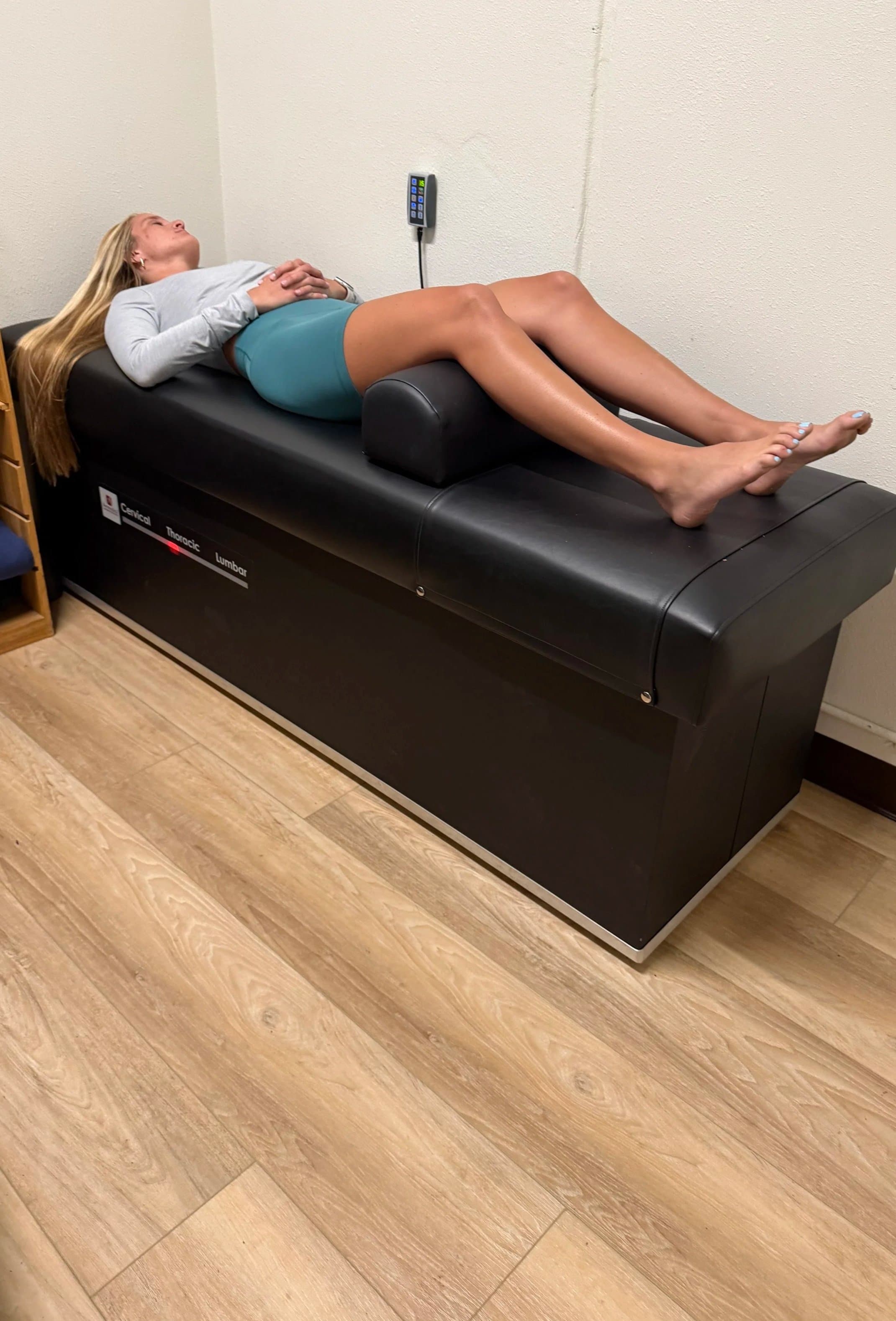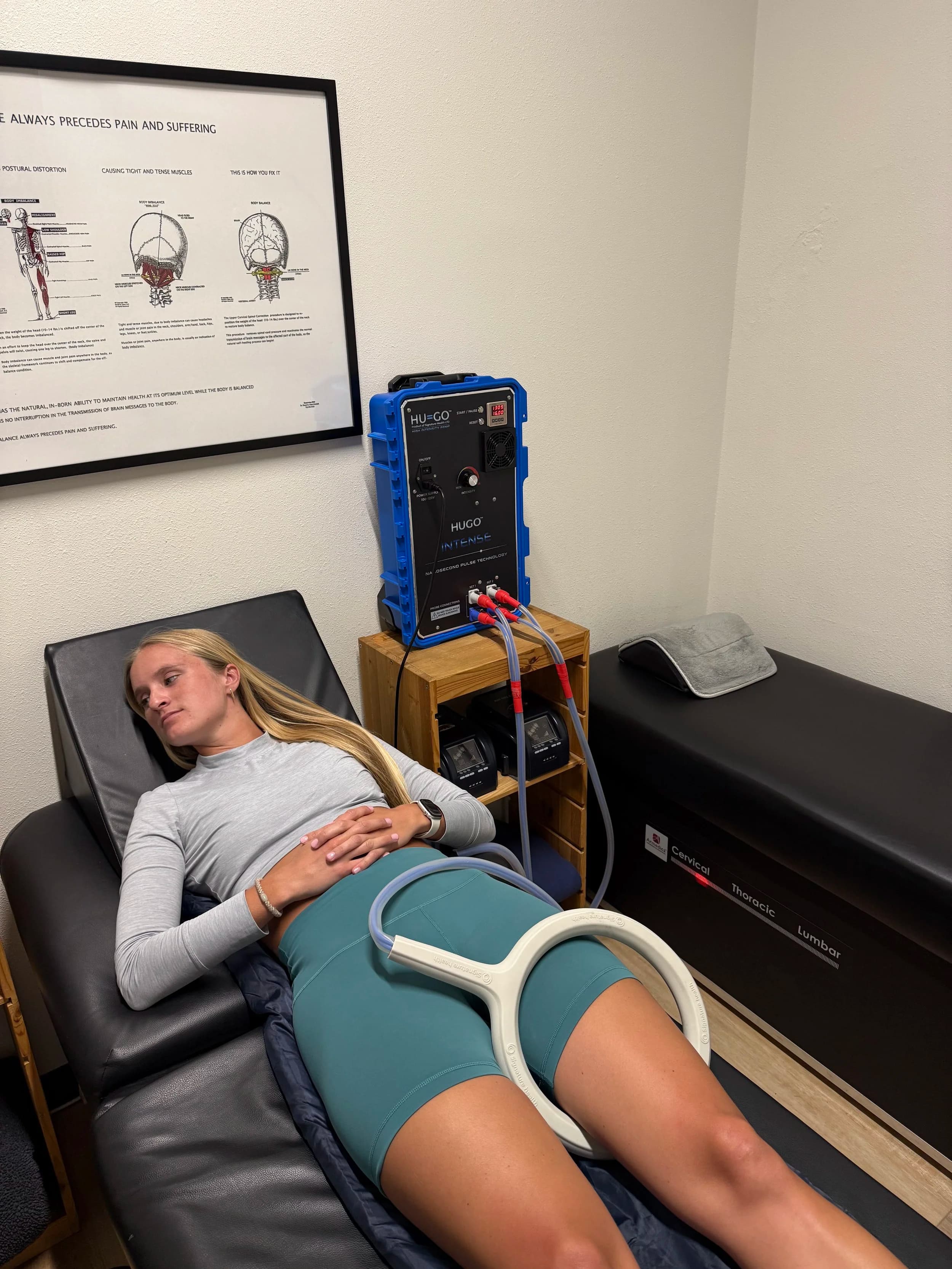
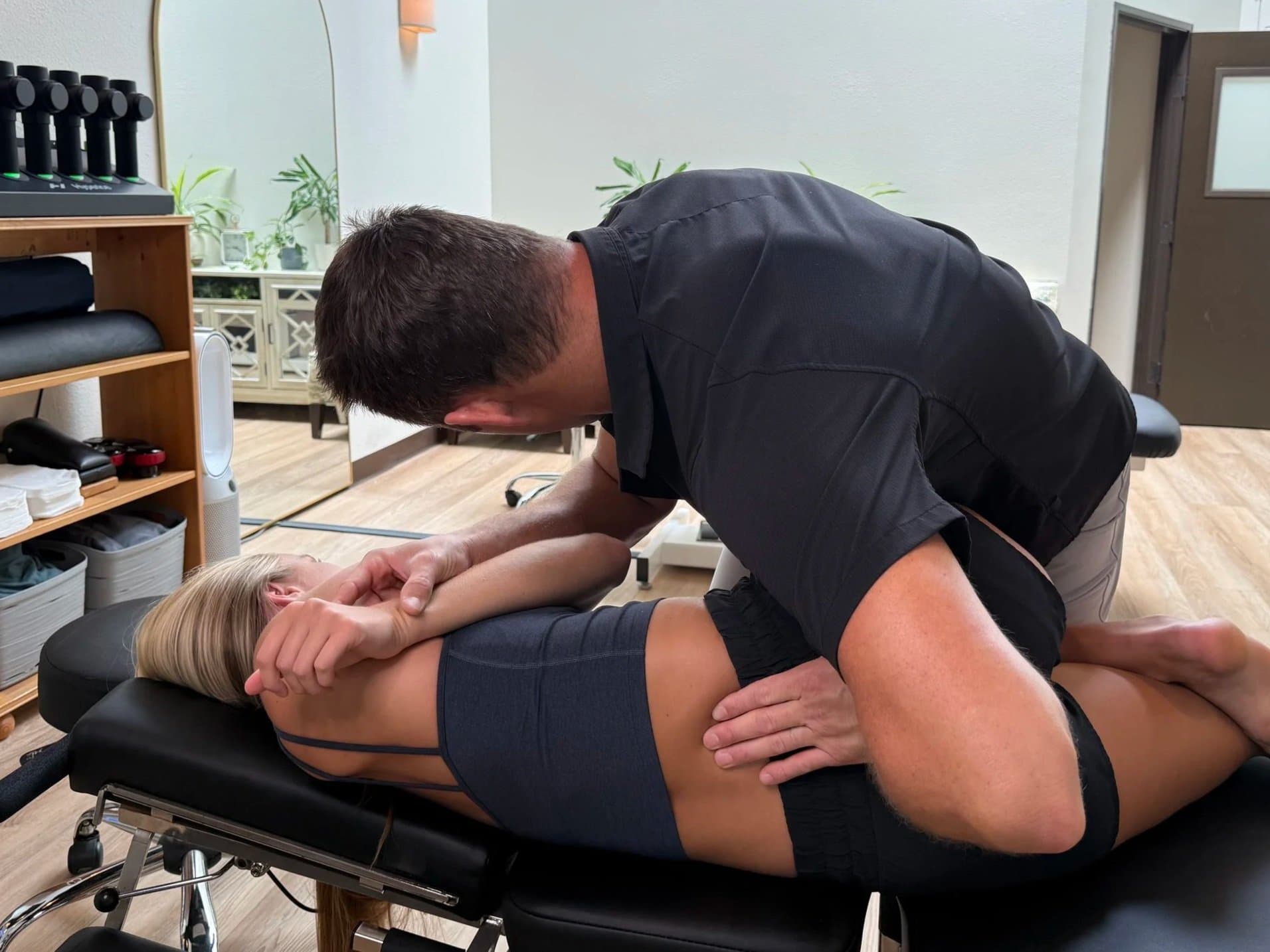
Chiropractic Adjustments
Diversified spinal adjustments
Learn more
Motorized traction that creates space where your spine has lost it.
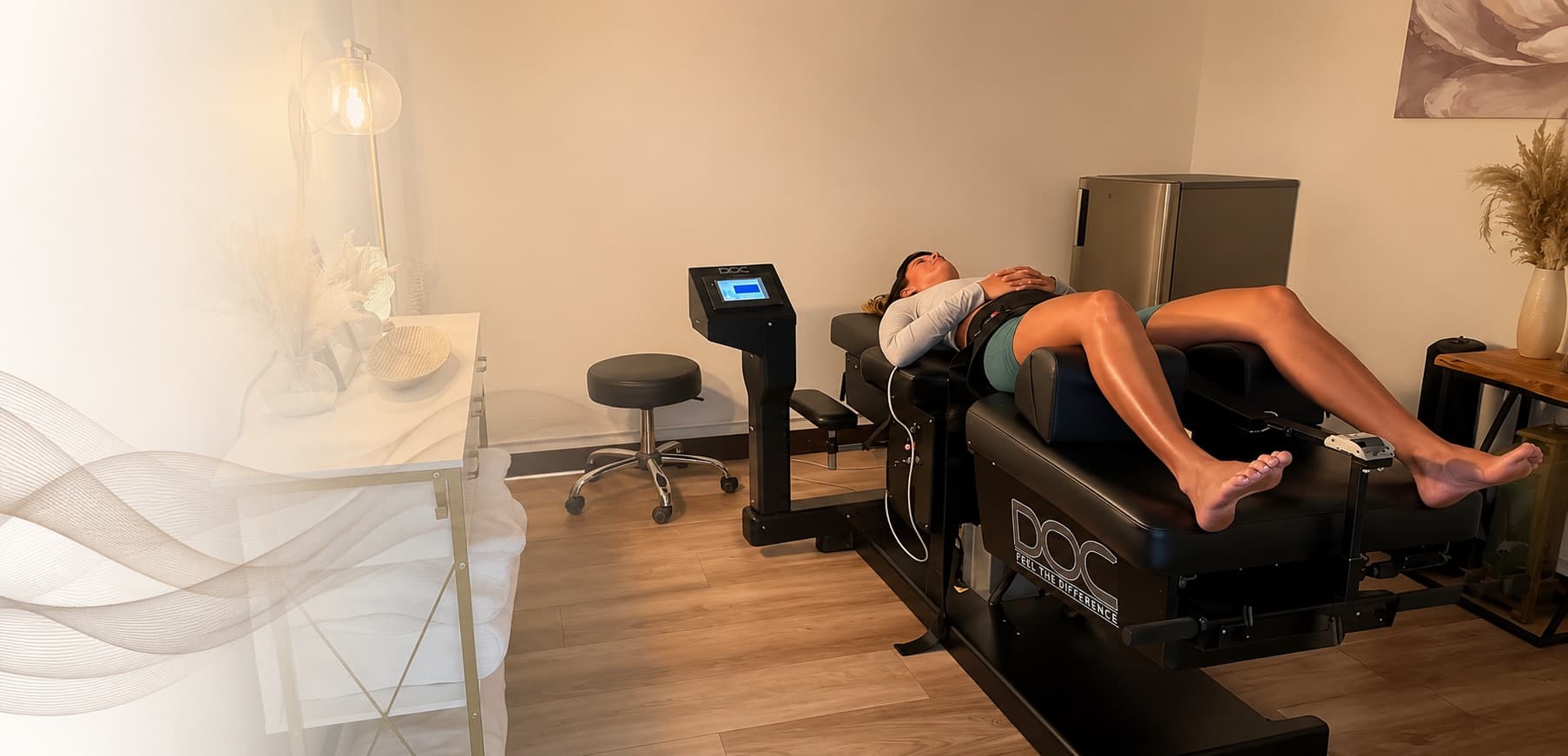
Non-surgical spinal decompression is a form of motorized traction that eases pressure on discs and nerve roots.
You lie comfortably on a computer-controlled table that applies gentle, cyclical pulling forces to a specific segment of your spine. It’s one of the most reliable non-surgical options for herniated discs, sciatica, and chronic disc-related low-back pain.
How it works
We position the table to target the specific spinal segment causing your symptoms, in the cervical or lumbar spine.
The table applies a programmed pulling force that eases on and off, avoiding muscle guarding.
Negative pressure draws fluid, oxygen, and nutrients back into the disc while relieving nerve compression.
We pair sessions with adjustments and rehab drills so the segment holds its new position between visits.
Why patients ask for it
Is it right for you?
Great for
Not right when
If any of these apply we’ll build a plan around a different modality, and we’ll tell you why.
What to expect
Duration
20-40 min per session
Frequency
2-3 sessions per week in an active protocol
Prep
Wear comfortable clothing, no need to change.
Most patients feel a shift in the first three to five sessions and complete a full protocol in twelve to twenty-four visits over six to twelve weeks. We reassess constantly, if it’s not working we don’t just keep going, we change the plan.
FAQ
Yes, when a proper exam has ruled out contraindications. The pull is gentle and controlled, not the aggressive traction people sometimes imagine.
Almost never. Most patients describe it as one of the most relaxing parts of their treatment. Several fall asleep on the table.
For many disc-related cases, a well-structured decompression protocol is worth trying before injections or surgery. If it does not work, you have not burned any bridges. We will say so.
An adjustment restores motion at a specific joint. Decompression creates space and takes pressure off a disc or nerve. Most patients with sciatica or a herniated disc benefit from both, not one or the other.
Often, when the sciatica is coming from a disc that is crowding a nerve root. You lie on a computer-controlled table that gently unloads that segment. It is not a miracle, and it is not for every back. We screen first. If the pain is from a tumor, infection, or fracture, decompression is the wrong tool.
Ready when you are
Schedule now. Most PPO plans accepted.