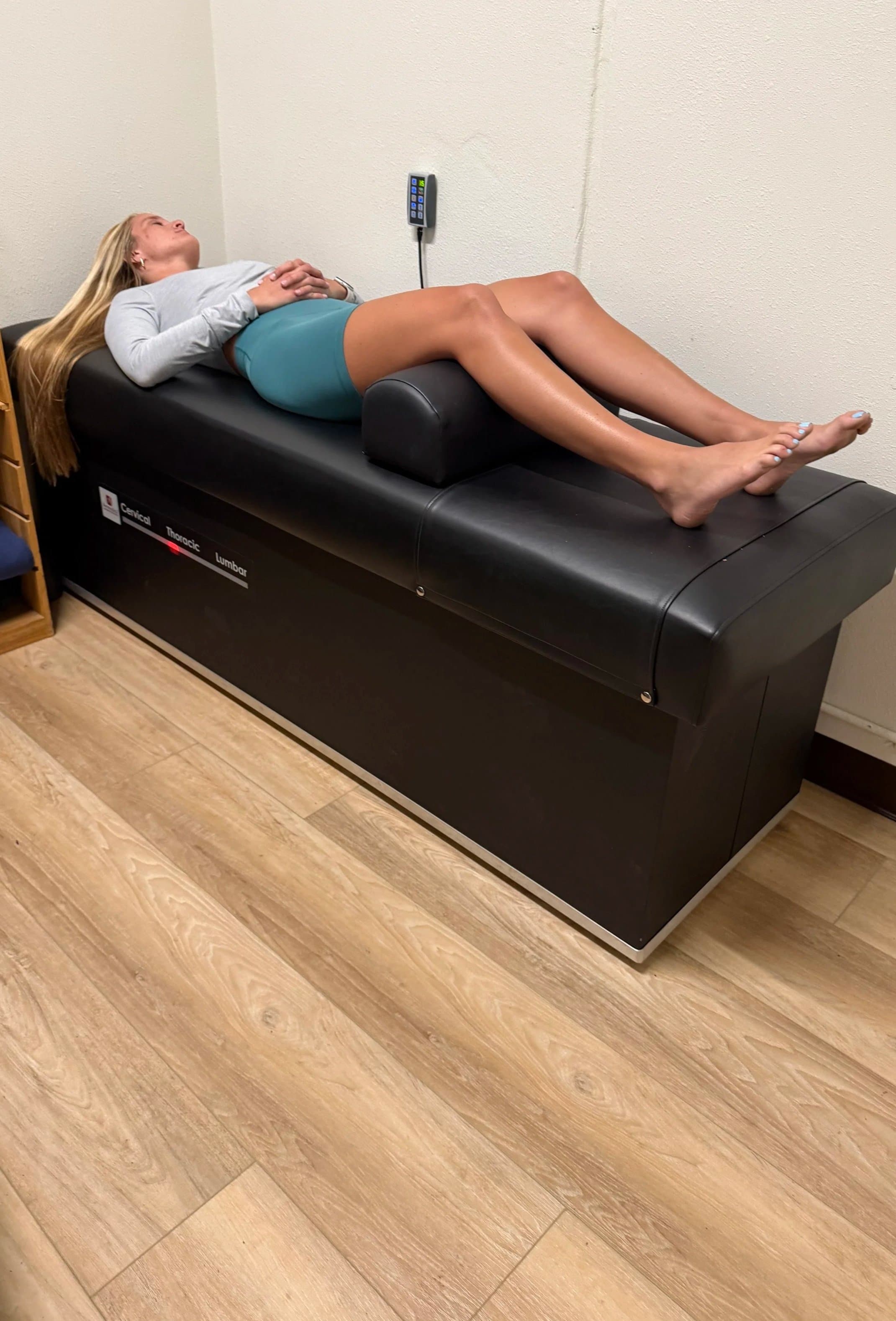
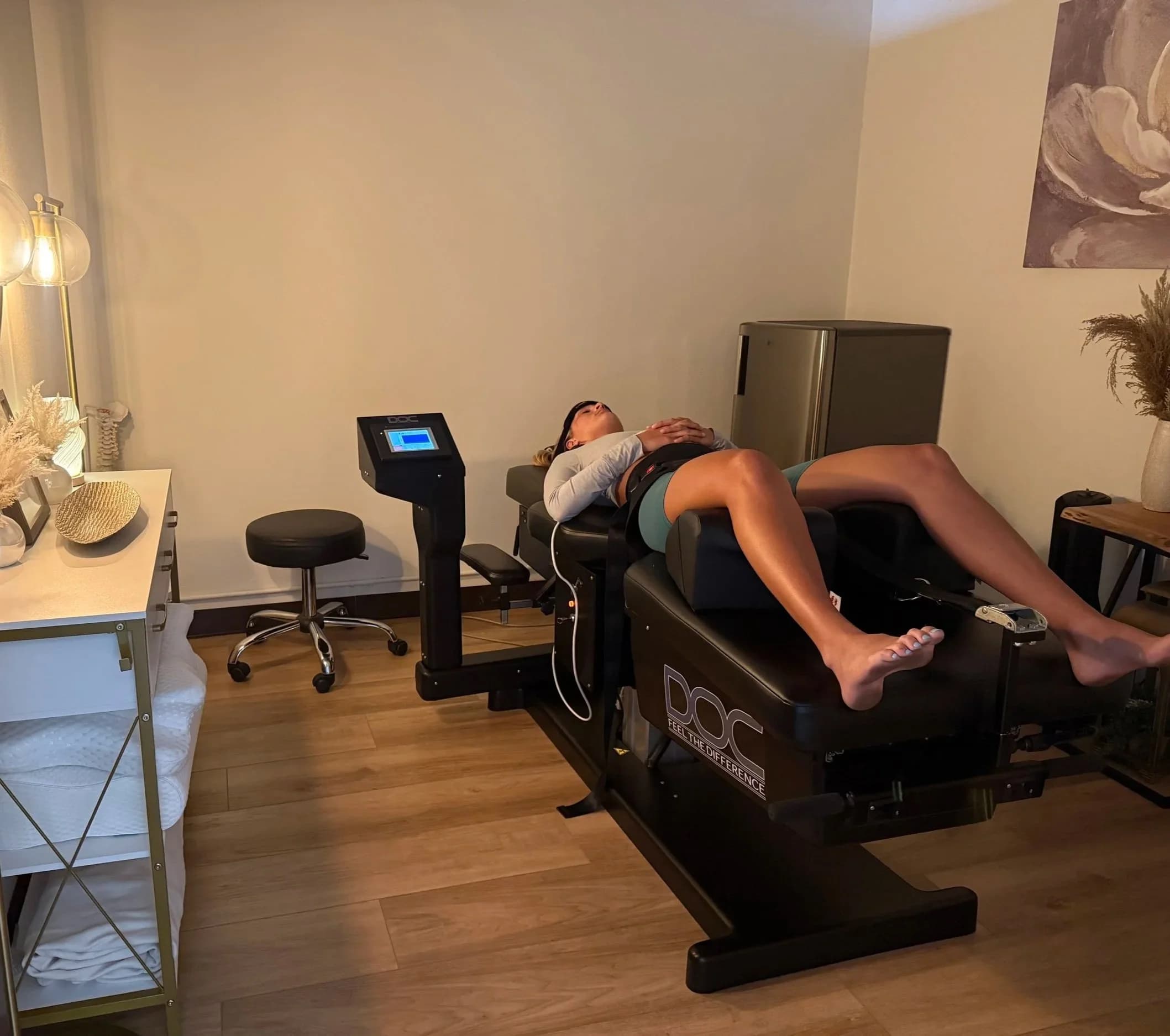
Spinal Decompression
Non-surgical disc relief
Learn more
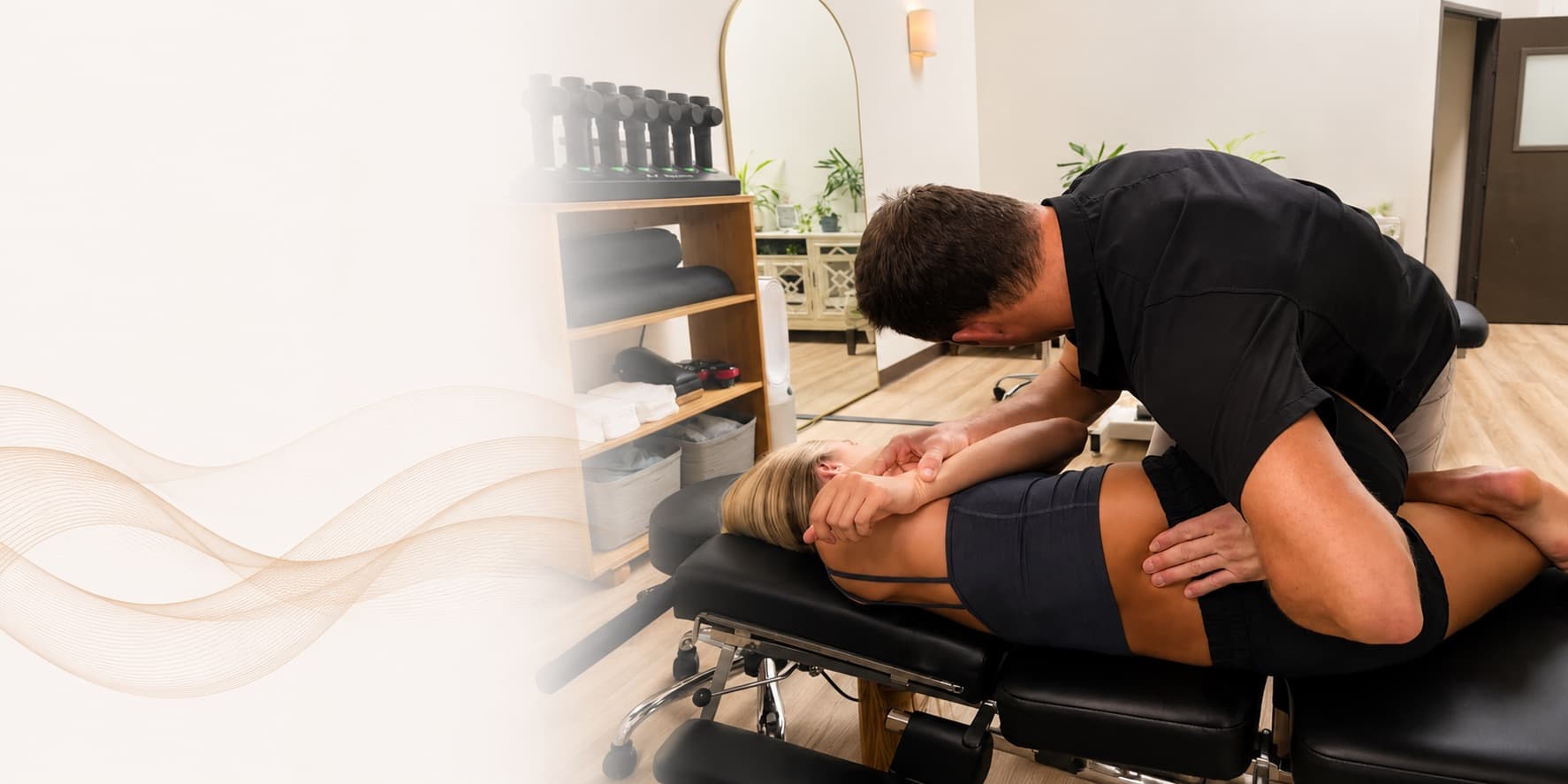
Precise, hands-on spinal manipulation that restores motion and calms the nerves passing through your joints.
If your back or neck has been stuck, a chiropractic adjustment is usually where we start — not because it is trendy, but because restoring joint motion is often the fastest way to quiet the muscle that has been guarding it.
We use Diversified technique: a precise, hand-delivered thrust aimed at the segment that is actually restricted that day. You are not on a 10-minute rotation. Dr. Dustin Hack or Dr. Tara Hadden stays in the room, and if an adjustment is the wrong next step, we say so.
How it works
We palpate segment-by-segment to find the joints that have lost normal motion or become guarded.
You’re positioned so the target joint is isolated and the surrounding tissue is relaxed.
A high-velocity, low-amplitude thrust restores motion. It’s quick, well under a second, and usually feels like a release of pressure.
We layer targeted soft-tissue work, mobility drills, or a recovery modality to help the segment hold its new position.
Why patients ask for it
Is it right for you?
Great for
Not right when
If any of these apply we’ll build a plan around a different modality, and we’ll tell you why.
What to expect
Duration
5-10 min adjustment · 45 min first visit
Frequency
1-3 visits per week in an acute plan
Prep
Wear comfortable clothing you can move in.
New-patient visits are about 45 minutes and include a full history, exam, adjustment, and plan. Follow-ups are shorter and focused on the specific segments we’re treating. Most patients feel a shift in the first two or three visits.
FAQ
For most people, no. The thrust is quick. Patients usually describe a release of pressure, not a stab of pain. Mild next-day soreness, like after a decent workout, is normal and typically gone in a day or two.
It restores motion in a joint that has gotten stuck or guarded. That takes mechanical pressure off the tissues around it and often quiets the muscle that has been bracing. The pop you hear is gas leaving the joint fluid, not bones cracking, and it is not required for the adjustment to work.
The common ones are temporary soreness, feeling a little tired, and the occasional mild headache. Those usually settle within 24 to 48 hours. Serious complications are rare. We screen first for red flags — progressive weakness, bowel or bladder changes, fever with back pain, major trauma — and we will not adjust a joint that should not be adjusted.
Yes, for a few hours. Your nervous system and the muscles around the joint just got new information. Most people feel settled by the next day. If you feel worse after 48 hours, or you notice spreading numbness or weakness, call us — that is not something to wait out.
Brief tingling after a low-back adjustment can happen as a nerve root that was crowded starts to move again. It should be mild and short. Tingling that lasts, spreads, or comes with weakness is not “normal settling.” Call the office or seek urgent care if that is what you are feeling.
Most acute cases plateau in three to six visits. Chronic or complicated cases take longer. We reassess constantly and change the plan if we are not seeing progress. We will not sell you a 20-visit package on day one.
Cash-pay is available. We quote the first-visit exam and any follow-up before you book, because those are different lengths. Call (949) 557-7208. HSA, FSA, and HRA cards are welcome. If you have PPO coverage, we would rather verify that first.
No. Chiropractors are primary-contact providers in California, so you can book directly. If your case is outside our scope we will tell you and refer you to the right specialist.
Ready when you are
Schedule now. Most PPO plans accepted.