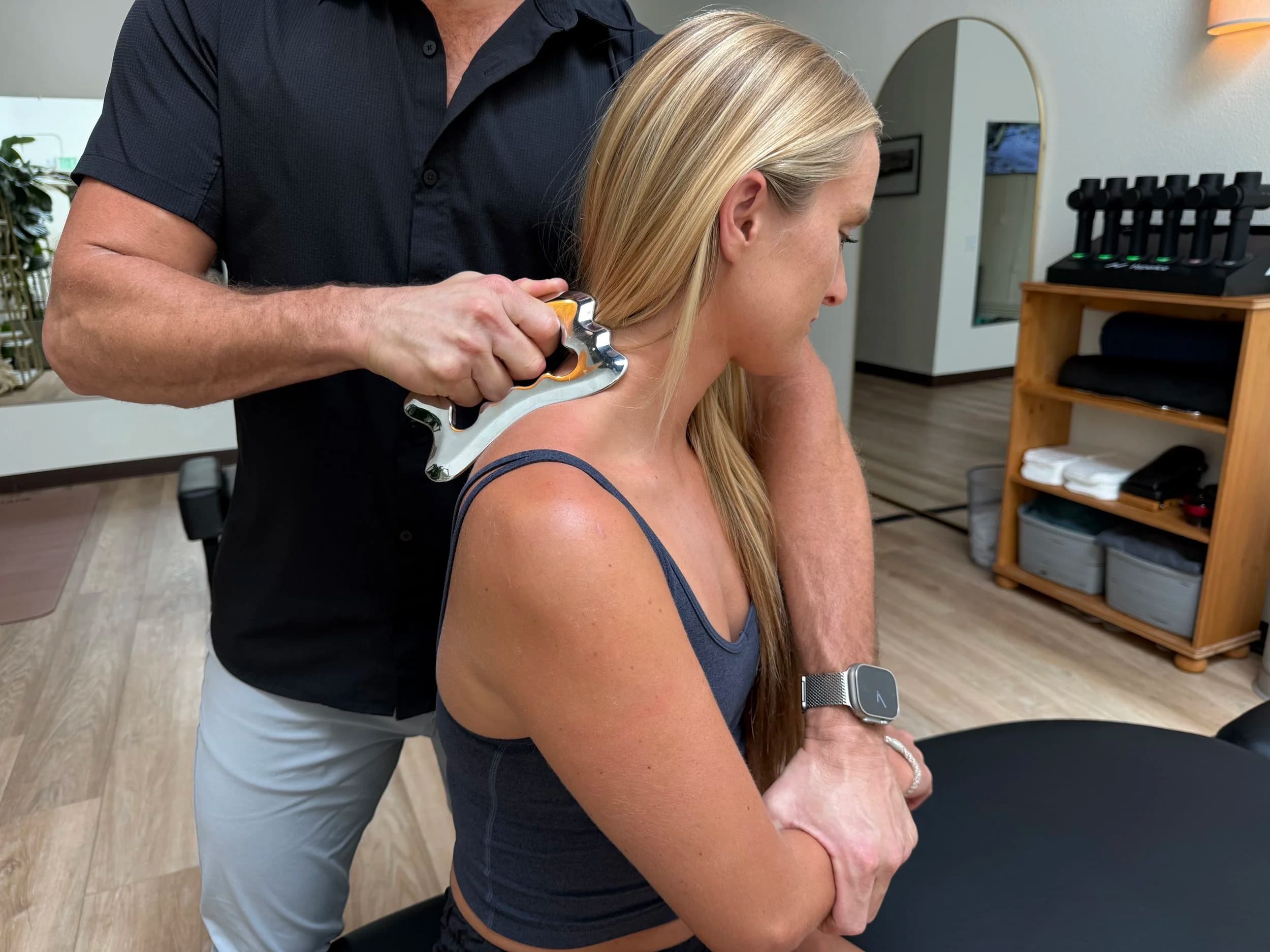
Myofascial Scraping
Fascial release
Learn more
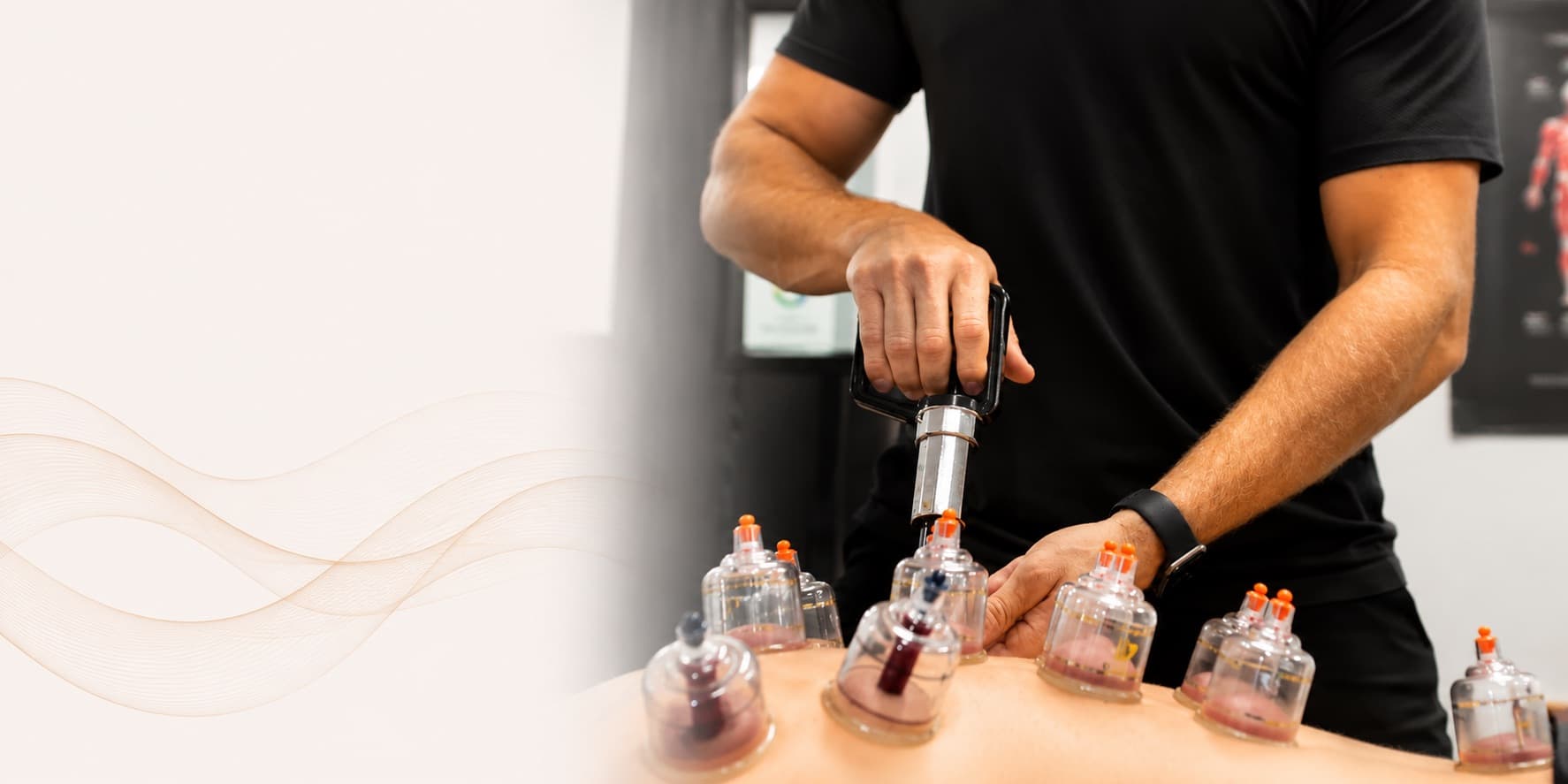
Suction that lifts fascia instead of pressing on it, the opposite direction of every other tool in the room.
Cupping uses controlled suction to lift the skin and superficial fascia away from the deeper tissue.
It’s the mirror-image of most manual therapy: every other tool presses down; cups pull up. That decompression helps loosen adhesions, boost local circulation, and take pressure off entrapped structures.
How it works
Silicone or glass cups are placed on the target area with a small amount of skin-safe oil.
The cups create negative pressure that lifts the skin and superficial fascia away from deeper tissue.
Depending on the goal we either leave the cups in place for 5-10 minutes or glide them slowly across the area.
You move the joint through range while cupping to encourage tissue glide.
Why patients ask for it
Is it right for you?
Great for
Not right when
If any of these apply we’ll build a plan around a different modality, and we’ll tell you why.
What to expect
Duration
10-15 min per treated area
Frequency
1-2 times per week during active treatment
Prep
Wear clothing that lets us access the area.
You’ll feel firm suction, strong but not painful. The classic circular marks are common and typically fade within 3-7 days. They’re not bruises in the traditional sense; they’re a mark of the tissue being pulled apart, and they’re harmless.
FAQ
No. The marks are surface-level and fade in a few days. They’re not bruises from impact; they’re from suction, which is a very different mechanism.
Cupping pulls tissue up; scraping shears across it. We often use both in the same session because they address the fascia from different angles.
If you have a photoshoot or event coming up, tell us and we’ll skip cupping that visit, there are plenty of other tools that don’t leave marks.
Ready when you are
Schedule now. Most PPO plans accepted.