Recovery
6 min read
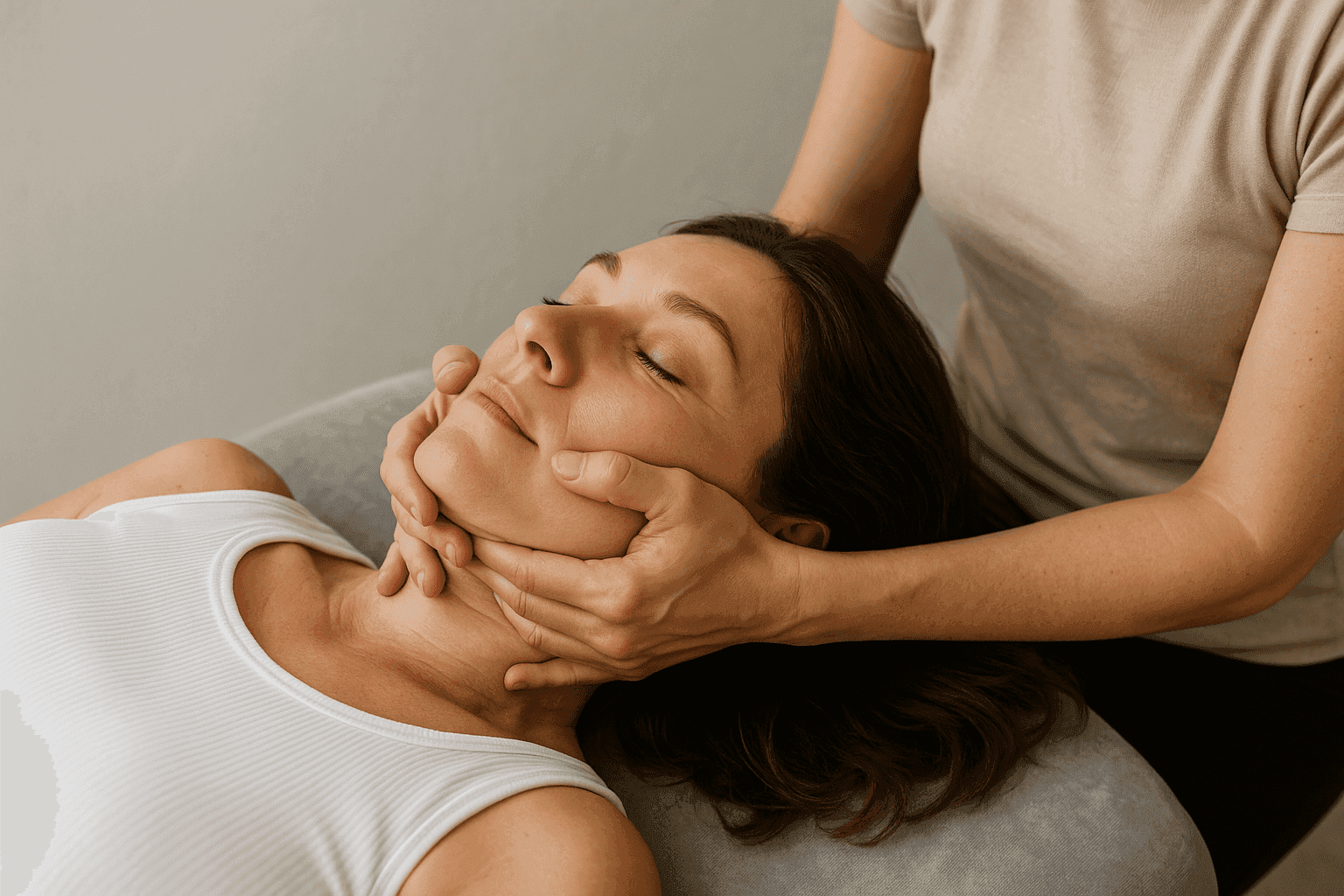
Myofascial Release for Lasting Muscle Relief
Discover how myofascial release in Laguna Hills may ease chronic muscle tightness, support mobility, and complement personalized recovery care at our clinic.
Read the article
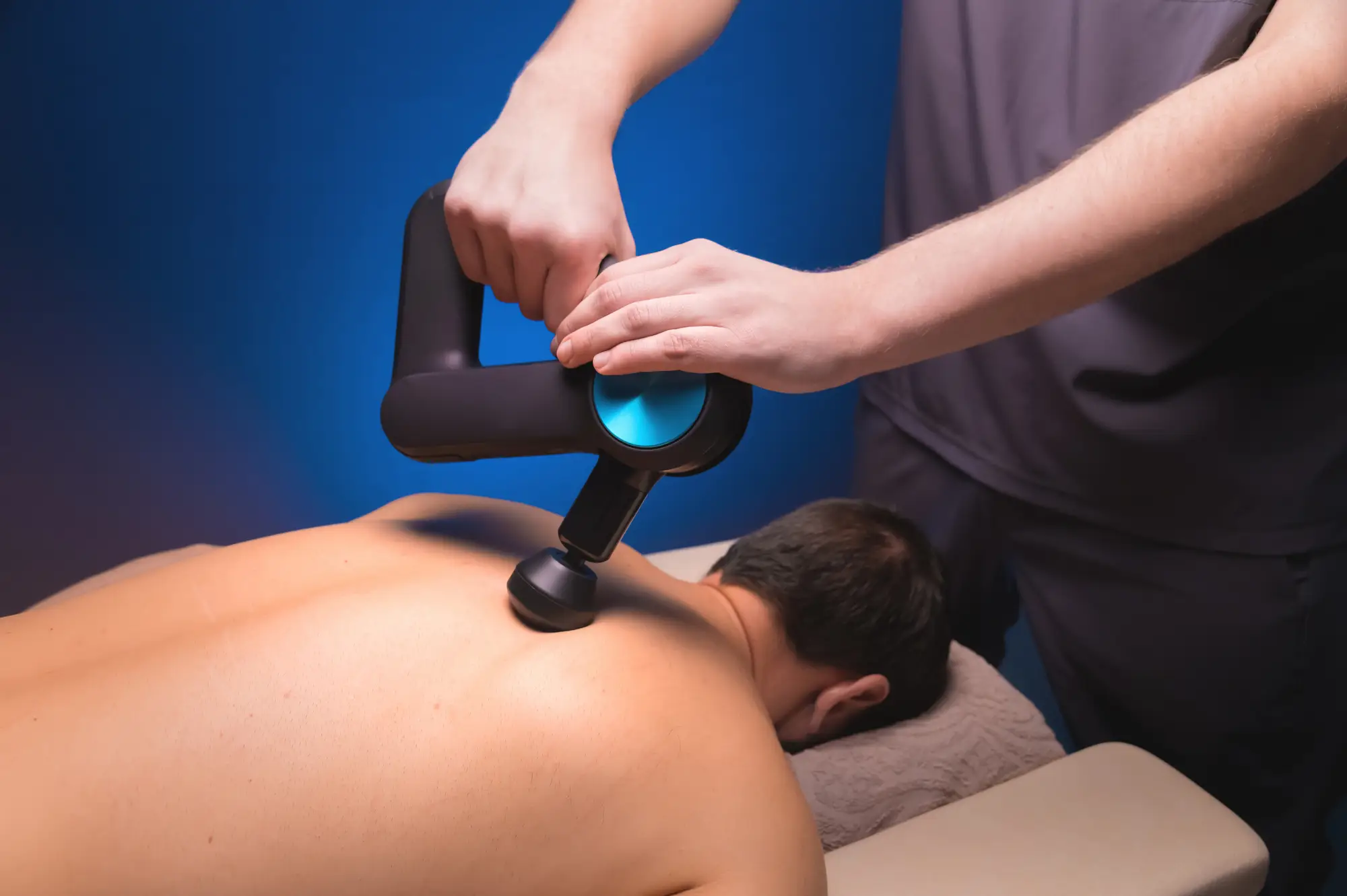
You’ve seen the massage guns everywhere, gyms, airports, your neighbor’s garage. Used well, percussion therapy is genuinely one of the fastest ways to unwind tight tissue and speed up recovery. Used badly, it’s a bruise machine. Here’s how we actually use it in-office, and when it’s the right tool for the job.
Percussion therapy delivers rapid, targeted mechanical pulses, typically 1,800–3,200 per minute, into a muscle group. Those pulses drive fluid movement in and out of the tissue, temporarily desensitize local pain receptors, and mechanically break up the low-grade adhesions that build up between fascial layers after hard training.
The net effect: you get looser, you move better, and you feel less sore, without the deep-bruise soreness that heavy manual work can leave behind.
Percussion is rarely the whole visit. It’s a prep and finish tool, we use it before adjusting to relax the tissue surrounding the segment we’re about to move, and again at the end to consolidate the change. Most treatments take 5–10 minutes on the target area, alternating heads and pressures based on how the tissue responds.
If you own a gun at home, three rules will keep you out of trouble: never hammer bone or a joint, never go longer than two minutes on the same spot, and never chase pain, chase range of motion. If a spot doesn’t change in a minute of work, put the gun down.
“Percussion is a wonderful assistant and adjunct to manual hands on work. Use it to unlock a session.”
Percussion pairs especially well with chiropractic adjustments, assisted stretching, and red light therapy. The typical flow: percussion → adjustment → red light or PEMF. It’s a small routine that stacks up to real, felt change, the kind of visit patients come back for.
If you’re training hard, coming back from an injury, or just tired of feeling wound up, a single well-run recovery session can reset your baseline. We’re minutes from Laguna Niguel, Mission Viejo, Aliso Viejo, Irvine, and Newport Beach, and you can schedule now or contact us with questions.
Written by
Dr. Dustin Hack, D.C.
Chiropractor · Aligned Health
Related services
Ready when you are
Schedule now. Most PPO plans accepted.
Keep reading
Discover how myofascial release in Laguna Hills may ease chronic muscle tightness, support mobility, and complement personalized recovery care at our clinic.

Move Beyond Morning Stiffness with the Right Care