
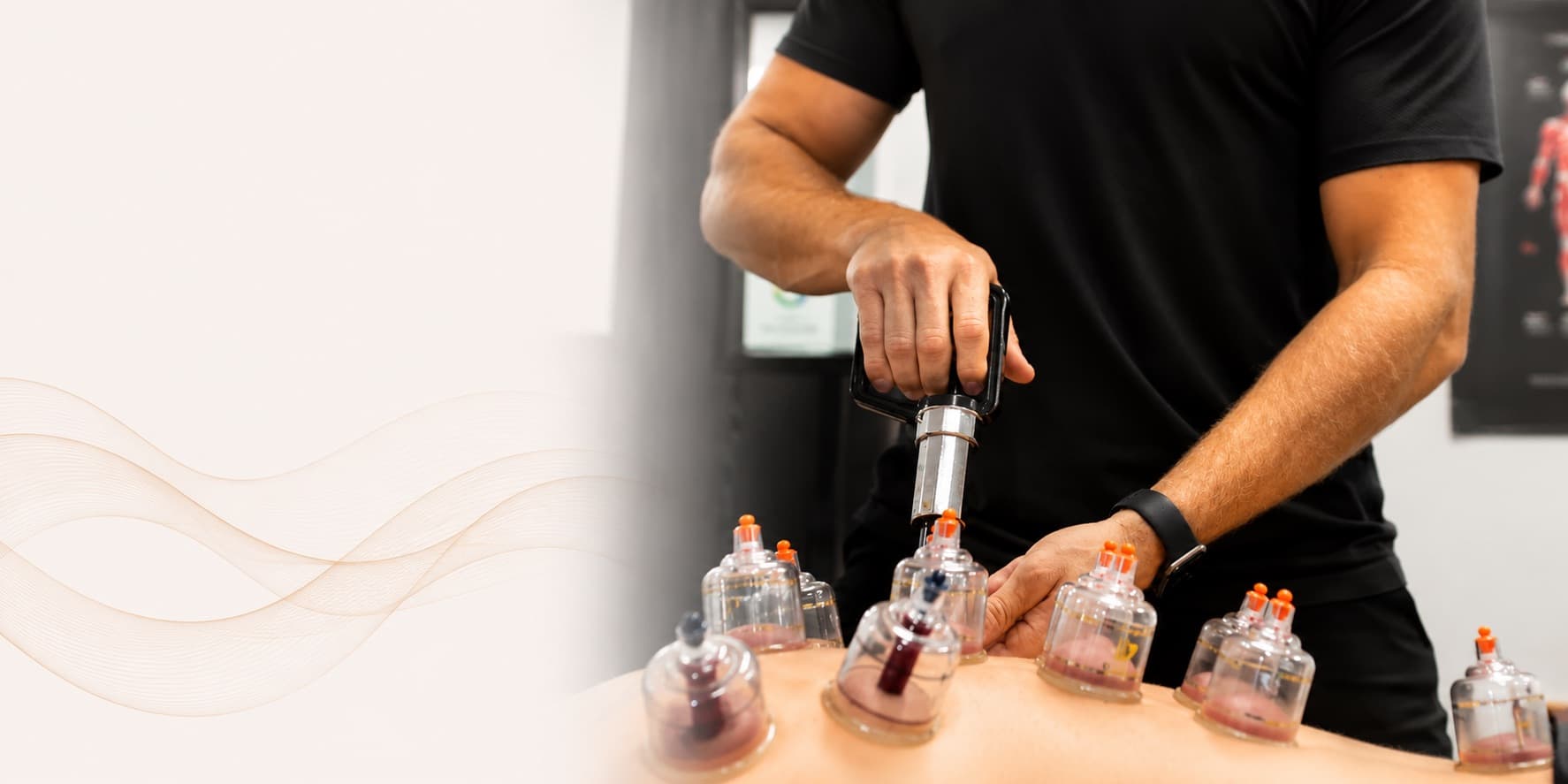
Cupping in Dana Point, CA
Cupping is one of 14 things we can do on site for people driving in from Dana Point. The office sits about 15 minutes from Dana Point via I-5 at Pacific Coast Highway, which is close enough for Lantern District residents to keep a real schedule instead of “I’ll go when it gets bad.”
Cupping is not a miracle. It helps when the problem is mechanical. If you have a red flag (new bowel or bladder changes, fever with back pain, unexplained weight loss, or weakness that is getting worse), we will not adjust first and ask later. Dana Point patients get the same screening as everyone else.
How it works
Inside a cupping session.
Place the cups
Silicone or glass cups are placed on the target area with a small amount of skin-safe oil.
Apply suction
The cups create negative pressure that lifts the skin and superficial fascia away from deeper tissue.
Static or gliding
Depending on the goal we either leave the cups in place for 5-10 minutes or glide them slowly across the area.
Pair with movement
You move the joint through range while cupping to encourage tissue glide.
What you can expect
Real results, close to home.
- Lifts fascia instead of compressing it
- Improves local circulation and lymphatic flow
- Releases stubborn superficial adhesions
- Complements percussion and scraping perfectly
- Comfortable for most patients, not the ‘painful pinching’ some expect
- Fast, most sessions are under 15 minutes
Why Dana Point patients choose us
Built for Dana Point patients.
- Lifts fascia instead of compressing it
- We already treat people commuting in via I-5 at Pacific Coast Highway, so we know the hours that actually work for Dana Point residents.
- A straightforward drive from Lantern District. Most Dana Point patients reach us about 15 minutes from Dana Point via I-5 at Pacific Coast Highway.
Questions from local patients
Dana Point FAQs.
Do you offer cupping for patients coming from Dana Point?
Yes. Dana Point residents, including people near Dana Point Harbor and Doheny State Beach, come in for cupping every week. The drive is about 15 minutes from Dana Point via I-5 at Pacific Coast Highway. No referral needed.
Will my PPO cover cupping if I live in Dana Point?
Often yes, when it is medically necessary. We verify Aetna, Anthem, Blue Shield of CA, United, Cigna, and Meritain before the first visit. Call (949) 557-7208 from Dana Point and we will tell you the copay before you get in the car.
What should I wear to cupping if I am driving from Dana Point?
Clothes you can move in. Skip the suit jacket. First visits run about 45 minutes; follow-ups are shorter. If you are coming from Lantern District, give yourself a few extra minutes on I-5 at Pacific Coast Highway at rush hour.
Is Cupping the right next step if I live in Dana Point?
Cupping uses controlled suction to lift the skin and superficial fascia away from the deeper tissue. We will tell you on visit one whether it is the right tool, or whether you need something else in the same office — or a referral.
Do the marks hurt or damage skin?
No. The marks are surface-level and fade in a few days. They’re not bruises from impact; they’re from suction, which is a very different mechanism.
How is cupping different from scraping?
Cupping pulls tissue up; scraping shears across it. We often use both in the same session because they address the fascia from different angles.
Getting here